
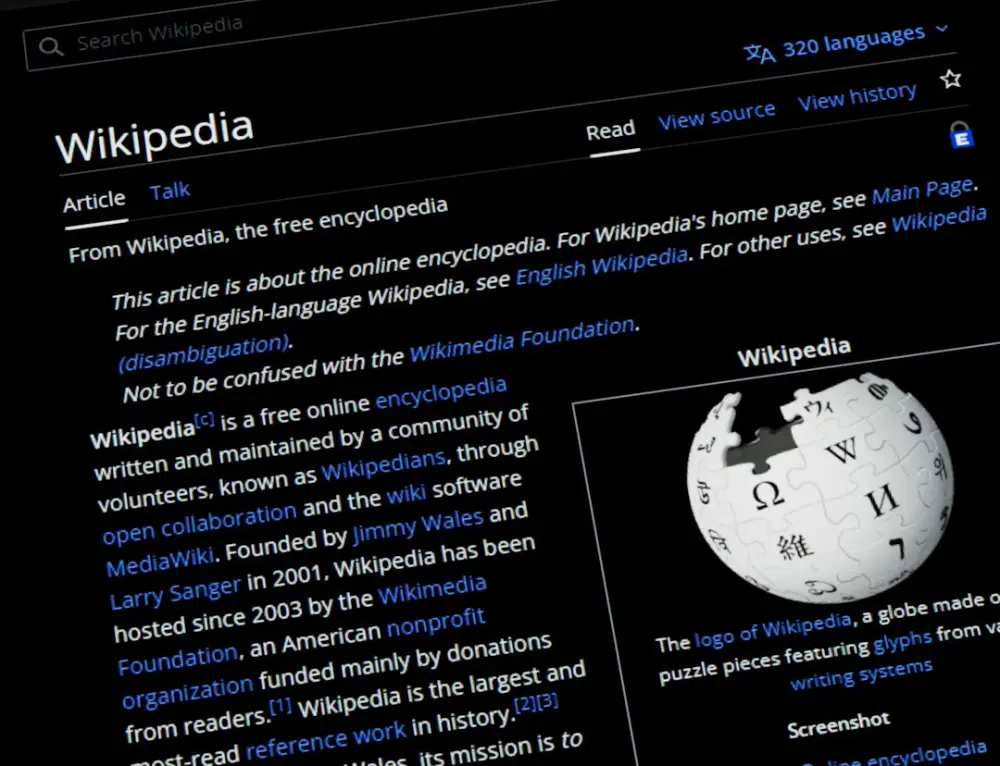
Wikipedia consensus is the collective agreement reached by editors through collaborative discussion and compromise. Unlike a majority vote, it prioritizes the quality of arguments and adherence to site policies. When editors disagree, the dispute resolution process provides structured steps—from informal talk page chats to formal mediation—to resolve conflicts and maintain neutral, encyclopedic content.
In 2026, reaching this agreement requires a balance between technical policy knowledge and interpersonal patience. Editors must navigate the "Talk" namespace to justify changes, using policy citations rather than personal opinions to persuade others. This process ensures that the encyclopedia reflects a neutral point of view rather than the loudest voice in the room.
Consensus is not a static state; it is a "living" agreement that can change as new information or more editors join a discussion. For example, a consensus reached in 2020 regarding the scientific classification of a specific virus might be revisited in 2026 as new peer-reviewed data emerges. The process usually begins with the Bold, Revert, Discuss (BRD) cycle. An editor makes a change (Bold), another editor who disagrees undoes that change (Revert), and both parties then head to the talk page to find common ground (Discuss). If the discussion fails to reach a clear path forward, the dispute resolution framework begins to scale upward.
A concrete example of this is found in the naming conventions for geographical locations. When an area has multiple names due to historical or political reasons, editors must look at reliable, English-language sources to determine the most common usage. This is not a vote where 51% wins; if the 49% can prove that the majority's preferred name violates the policy on neutral titles, the "minority" argument may actually carry the day. This nuanced approach is why we still trust ordinary people to curate such a massive repository of human knowledge.
How the Dispute Resolution Process Works
The dispute resolution process is designed to be a series of escalating steps, starting with the most informal methods and ending with the most rigid, quasi-legal structures. The goal is always to solve the problem at the lowest possible level. Most disagreements end at the article talk page, where editors explain their reasoning. If that fails, the next step is often a Third Opinion (3O), where a neutral editor who has not been involved in the article provides a non-binding perspective on how to interpret policy in that specific instance.
For more complex issues involving multiple editors, a Request for Comment (RfC) is the standard tool. An RfC places a formal notice on the article's talk page and in various community portals, inviting the broader community to weigh in on a specific question. This process usually lasts 30 days. After the discussion period, an uninvolved editor—often an administrator—will "close" the RfC by summarizing the community's consensus. This summary becomes the binding decision for the article until new evidence justifies a new discussion.
When the conflict is not about content but about editor behavior—such as harassment or persistent violation of the three-revert rule—the matter may move to the Administrators' Noticeboard. Here, the focus shifts from "what should the article say?" to "is this editor following the rules of conduct?" This distinction is vital because behind the edits: who really controls the narrative is often a question of who follows the procedural rules most effectively. The final stop for the most intractable disputes is the Arbitration Committee (ArbCom), which acts as a supreme court, issuing binding rulings and sanctions.
Recognizing Deceptions During Mediation Efforts
Mediation and dispute resolution are often targets for those seeking to "game the system." One common deception is known as "civil POV pushing." This occurs when an editor remains superficially polite and follows all technical rules while relentlessly pushing a biased agenda, effectively wearing down other editors through sheer persistence. Because they are not technically being "uncivil," they can be difficult to sanction, making them a significant challenge for consensus-building.
Another form of deception is "meatpuppetry," where an editor recruits friends or off-wiki groups to join a discussion and create the illusion of a broad consensus. This is distinct from "sockpuppetry," which involves one person using multiple accounts. In a 2026 context, identifying these patterns often requires looking at the timing of edits and the specific rhetoric used. If five new accounts suddenly appear on a talk page using the exact same phrasing to support a niche political position, seasoned mediators will flag this as a likely coordinated effort rather than a genuine organic consensus.
To combat these deceptions, mediators look for "consensus-blocking" behaviors. This includes "tendentious editing," where an editor repeats the same arguments long after they have been refuted by the community. A concrete example of this was seen in disputes over the inclusion of fringe medical treatments; even when presented with high-quality meta-analyses from sources like the National Institutes of Health, some editors would continue to cite low-quality blogs to keep the discussion in a state of perpetual deadlock. Recognizing that a discussion is no longer productive is a key skill for any Wikipedia mediator.
Expert Perspectives: Fred E. Jandt on Conflict
The work of Fred E. Jandt, a noted expert in conflict resolution and intercultural communication, provides a useful lens for understanding Wikipedia’s internal struggles. Jandt emphasizes the difference between "distributive" negotiation (where one side wins and the other loses) and "integrative" negotiation (where both sides find a way to expand the value of the outcome). Wikipedia’s consensus model is fundamentally an attempt at integrative negotiation.
Jandt’s theories suggest that conflict is not inherently negative but can be a catalyst for clarity and better communication if managed correctly. On Wikipedia, a heated dispute over a controversial figure's biography often results in a much more robust, well-sourced, and neutral article than if one editor had written it without challenge. The friction forces editors to find the highest-quality sources to back their claims. Jandt’s focus on "win-win" outcomes is reflected in the way mediators encourage editors to find phrasing that satisfies the concerns of all parties without sacrificing factual accuracy.
In practice, applying Jandt’s perspectives means moving away from the "I am right" mentality toward a "What does the evidence require?" approach. For example, in a dispute over the historical impact of a specific law, a Jandt-style mediator would encourage editors to include multiple perspectives rather than choosing one. This aligns with Wikipedia’s Neutral Point of View (NPOV) policy, which mandates that articles should represent all significant views that have been published by reliable sources, in proportion to their prominence.
Privacy Considerations in Professional Mediation
While Wikipedia is built on transparency, certain aspects of dispute resolution require strict privacy. This is particularly true when dealing with the Arbitration Committee. When an editor is accused of serious misconduct that involves off-wiki behavior, such as "doxing" (revealing private information) or legal threats, the evidence is often submitted privately via email to the committee members. This prevents the sensitive information from being spread further on the public site.
Privacy is also a major concern when editors are targets of harassment. In these cases, professional mediation might involve CheckUsers—editors with special technical permissions—who can look at IP addresses and technical data to determine if multiple accounts are being used by the same person to harass another. This data is never made public, as it would violate the site's privacy policy and potentially the law. The balance between the community's "right to know" and the individual's right to privacy is a constant tension in the mediation process.
For instance, if an editor claims that another user is stalking them across multiple articles, the evidence must be handled carefully. If the mediator confirms the stalking through private logs, they may issue a "topic ban" or a site-wide block without revealing the specific technical evidence that led to that decision. This ensures the safety of the victim while maintaining the integrity of the encyclopedia. This level of professional handling is what separates the formal dispute resolution process from a standard internet comment section.
Where to begin learning Wikipedia dispute tools
Start with read-only spaces before you edit contested pages.
- First step: create an account and enable notifications on your user talk page.
- Start by reading the five pillars and the bold, revert, discuss cycle.
- To begin asking questions, visit the Teahouse or Help Desk with a specific policy link.
- Follow these steps to watch a talk-page thread and note how editors cite guidelines.
- Make a small constructive edit on a stable article before joining a heated dispute.
Exploring Wikipedia Content and Dispute Categories
Disputes on Wikipedia generally fall into several distinct categories, each requiring a different approach to resolution. The most common is the content dispute, which focuses on specific facts, wording, or source reliability. These are usually resolved through RfCs and the application of core content policies. Then there are conduct disputes, which involve how editors interact with each other. These are often more emotional and require intervention from administrators to maintain a civil environment.
A third category involves "administrative disputes," where the community disagrees with a specific action taken by an administrator, such as a page protection or a user block. These are handled through specialized noticeboards where other administrators review the action. Finally, there are "policy disputes," where the community debates the rules themselves. These discussions often take place in the "Village Pump," a set of forum-like pages where changes to the site's guidelines are proposed and hashed out over weeks or months.
For those navigating these waters in 2026, the takeaway is that the system is designed to be slow and deliberate. If you find yourself in a disagreement, the best course of action is to step back, cite a specific policy like WP:Verifiability, and wait for others to weigh in. Avoid making it personal. The strength of the encyclopedia lies in its ability to absorb conflict and turn it into a more accurate record of the world. Understanding these mechanisms is essential for anyone who wants to contribute meaningfully to the project.
At The State Of Wikipedia, we examine these structural nuances because they define the reliability of the information we consume daily. The consensus model is more than just a set of rules; it is a cultural commitment to the idea that collective human effort, moderated by rigorous process, can produce something more trustworthy than any single individual or algorithm. By diving into the mechanics of dispute resolution, we gain a clearer picture of how the world's knowledge is truly shaped.