
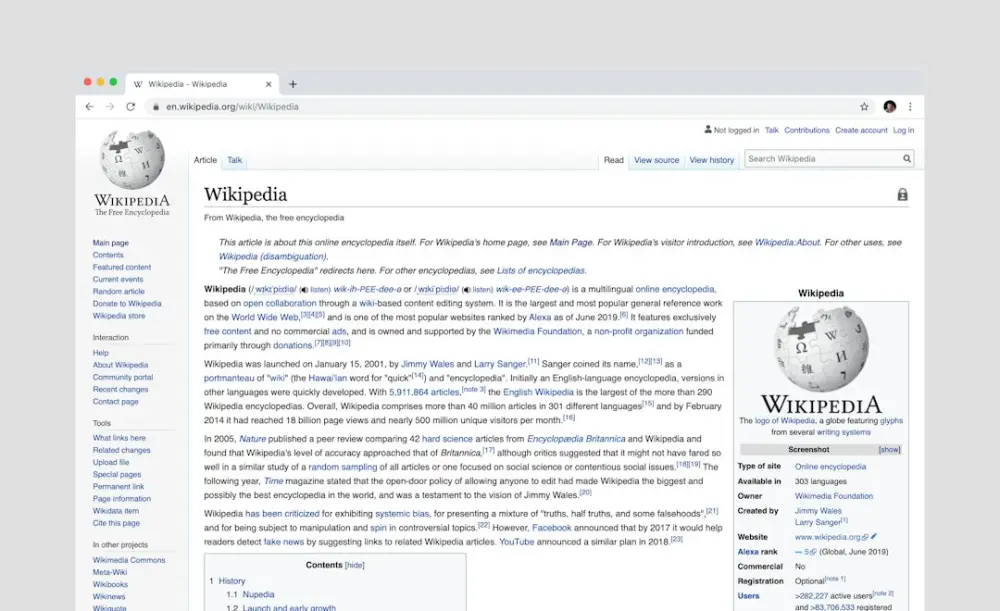
Wikipedia editing policies are the fundamental rules and community standards that govern how content is created and modified. These policies ensure that every article maintains a neutral point of view, relies on verifiable third-party sources, and adheres to encyclopedic standards. They provide a framework for collaborative editing while preventing bias, promotional content, and misinformation.
For new editors, navigating these rules can feel like learning a second language. Success on the platform isn't just about knowing facts; it’s about understanding the specific mechanisms of attribution and neutrality that allow a crowd-sourced project to maintain academic rigor. Mastering these standards is the first step toward contributing meaningfully to the world's largest repository of knowledge.
Wikipedia’s Five Pillars and Core Content Policies
The foundation of all activity on the site rests on the "Five Pillars." These are the overarching principles that define the platform’s character. The first pillar establishes that the site is an encyclopedia, not a dictionary, a newspaper, or a soapbox for personal opinions. The second pillar mandates a neutral point of view (NPOV), requiring editors to represent all significant views published by reliable sources fairly and without bias.
Beyond the pillars, three core content policies dictate what actually makes it onto a page. First is Verifiability, which means readers must be able to check that the information comes from a reliable source. Second is No Original Research; editors cannot publish their own new theories or insights. Third is Neutral Point of View. For example, when writing about a controversial scientific theory, an editor must document the prevailing scientific consensus alongside significant minority views, rather than taking a side or giving undue weight to fringe theories.
How to Start Editing Wikipedia Articles
Most contributors begin by making small corrections to existing entries. You can use the VisualEditor, which functions like a standard word processor, or the Source Editor, which requires a basic understanding of Wiki markup language. Before making significant changes to a high-traffic article, it is standard practice to use the "Talk" page to propose edits and seek community feedback. This helps prevent "edit warring" and ensures that changes align with the existing wikipedia consensus and dispute resolution processes.
A practical way to start is by using the "Sandbox" feature. This is a personal drafting space where you can experiment with formatting and citations without affecting live articles. For instance, if you want to update the economic statistics for a city like Tokyo based on a 2026 government report, you should first draft the entry in your sandbox to ensure the citation templates are correctly applied before moving the text to the main article space. This cautious approach is a hallmark of the editors who understand behind the edits: who really controls the long-term quality of the site.
Formatting Standards and the Manual of Style
The Manual of Style (MoS) is an extensive guide that ensures consistency across millions of articles. It covers everything from punctuation and grammar to the layout of complex tables. While it may seem pedantic, this consistency allows readers to navigate different topics—from quantum physics to 1970s cinema—with the same ease of use. The MoS dictates that articles should begin with a lead section that summarizes the topic, followed by body paragraphs organized by logical subheadings.
Specific formatting rules often depend on the article's context. For example, an article about a British historical figure should use British English spelling (like "colour" or "centre"), while an article about a U.S. National Park should use American English. Date formats must also be consistent within an article; you wouldn't mix "November 8, 2026" with "8 November 2026" in the same entry. These small details are often what distinguish a professional-grade entry from a casual one.
Sourcing Requirements and Subject Notability
Not every topic deserves a Wikipedia article. The concept of "Notability" is the gatekeeper of the site’s scope. To be notable, a subject must have received significant coverage in reliable, independent secondary sources. This means that a local business, a self-published author, or a minor social media trend likely won't qualify for an entry unless they have been the subject of multiple in-depth articles in reputable newspapers, academic journals, or books.
Sourcing is the most critical technical skill for an editor. Reliable sources (RS) generally include peer-reviewed journals, university press books, and mainstream news outlets with a reputation for fact-checking. Primary sources, such as a company's own press release or an individual's personal blog, are generally discouraged for establishing facts or notability. According to the Wikipedia:Reliable sources guideline, the goal is to provide a neutral summary of what the world’s best sources have already said about a topic.
Staying Compliant with Community Guidelines
Community guidelines govern the behavior of editors and the social dynamics of the site. One of the most important rules is the Conflict of Interest (COI) policy. If you are being paid to edit, or if you are writing about yourself, your employer, or your own company, you must disclose this relationship. Editing to promote a personal agenda or a commercial product is a violation of the site's mission and often leads to the content being deleted and the user being blocked.
Another key guideline is the Three-Revert Rule (3RR), which prevents editors from undoing the same change more than three times in a 24-hour period. This rule is designed to stop edit wars and force editors to discuss their differences on the Talk page. Instead of repeatedly deleting a sentence you disagree with, the community expects you to explain why the sentence fails to meet policy and work toward a compromise. This focus on civil discourse and evidence-based argument is what maintains the platform's integrity.
Understanding these policies is essential for anyone interested in the mechanics of digital knowledge. At The State Of Wikipedia, we examine how these internal rules shape the public's perception of reality. By adhering to strict sourcing and neutrality standards, the volunteer community attempts to build a reliable record of human knowledge, but the process is only as strong as the editors who follow and enforce these guidelines. Navigating the friction between open access and editorial control is the central challenge of the platform's culture.